Printable Addition Bingo Card Generator
Create custom Addition Bingo cards for a small-group math game. Players take turns drawing two number cards, add them together to create an addition question, and check their own bingo cards for the answer. The students run the game themselves, making it engaging and easy to play with minimal teacher supervision.
Used by thousands of teachers · Instant PDF download · No account required
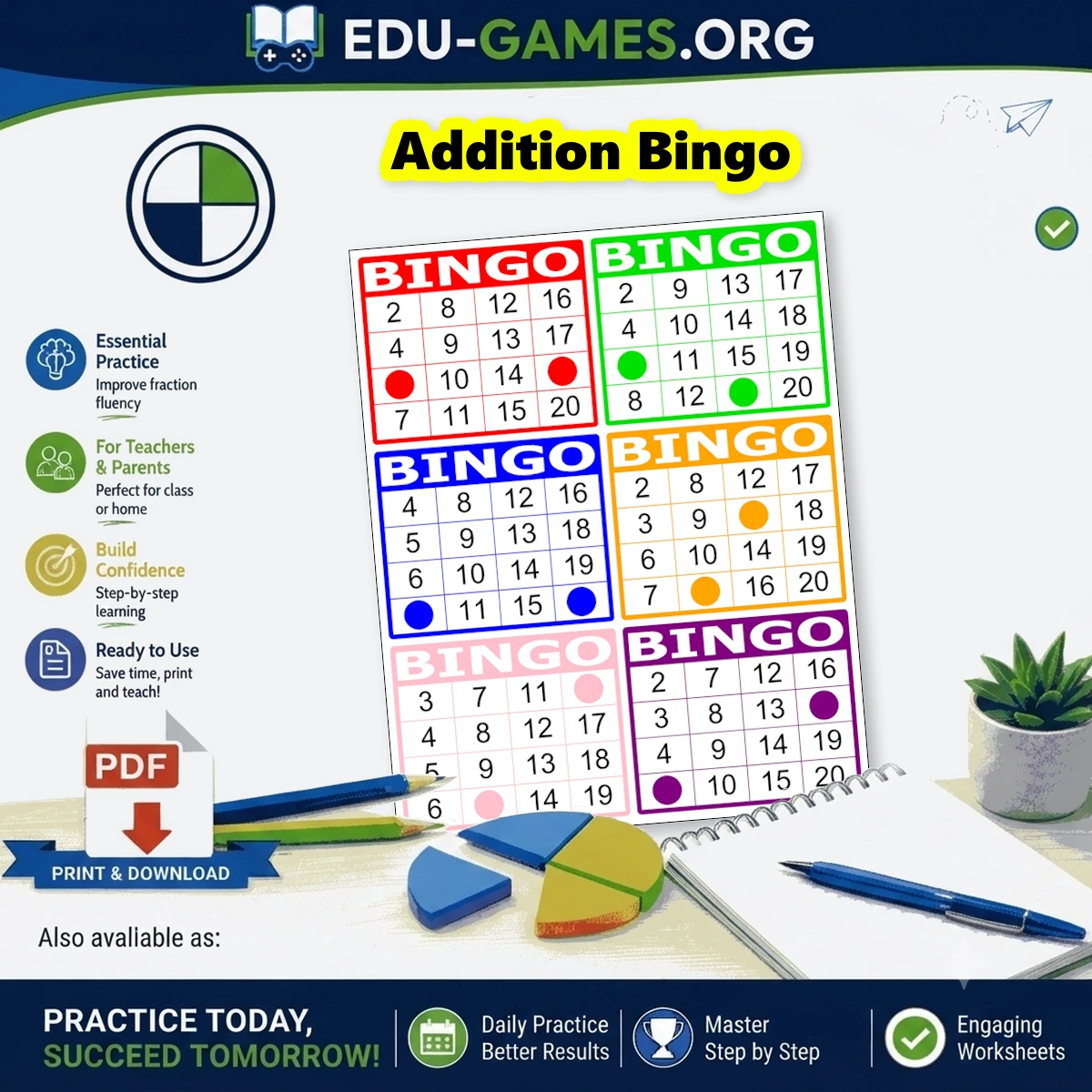
Customize Your Addition Bingo Game
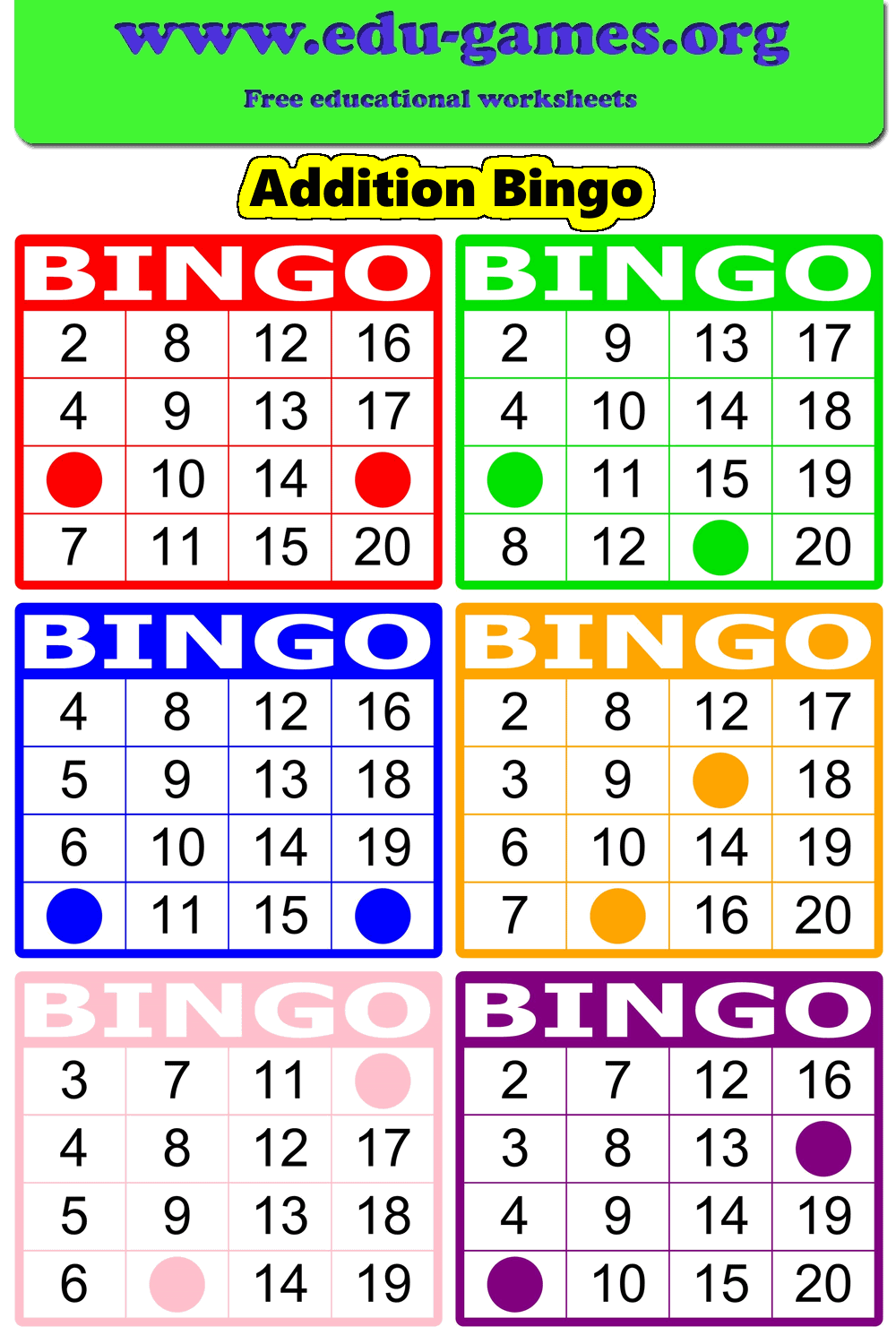
Addition Bingo is a small-group game that gives students an active way to practise addition facts. Each player gets a bingo card with addition answers, while a deck of number cards is placed face-down in the middle of the group.
Players take turns drawing two cards from the deck. The two numbers create an addition question, which the player solves. Everyone checks their own bingo card to see whether the answer is there and marks it if they have it.
Because the students draw the cards, solve the questions, and check their own cards, the game keeps everyone involved. It is also largely self-correcting, so the teacher does not need to call out every question or check every answer.
Choose the card size to set the difficulty level. A 4×4 card works well for students who are just starting out with addition, while a 5×5 card offers more of a challenge. Set the max operand to control which addition facts are practised, then choose how many bingo cards you need and download the printable PDF.
Share this free Addition Bingo generator
How to Play Addition Bingo in Small Groups
Addition Bingo is designed to be played in small groups rather than as a whole-class teacher-led activity. The students take turns drawing cards, solving addition questions, and checking their own bingo cards. This keeps everyone involved and means the teacher can let the groups play independently.
1. Customize and Generate
Use the generator above to choose your card size and max operand. Click "Create Bingo Cards" to generate a unique bingo card for each player. Then download the PDF.
2. Print and Prepare
Print the PDF. The last page contains the number cards needed for the game. Cut them out and place the cards face-down in the middle of each group.
3. Draw Two Cards
Players take turns drawing two number cards from the deck. The two numbers create an addition question. For example, if a player draws 4 and 7, the question is 4 + 7 = ?
The player solves the question and says the answer aloud. All players then check their own bingo cards. Anyone with 11 on their card marks it off.
4. Keep Playing
The next player draws two cards and creates the next addition question. Continue taking turns until one player completes a row, column, or diagonal.
The game keeps everyone involved because every player needs to solve each addition question and check their own card. Since the answers are visible on the bingo cards, students can also check their own work rather than relying on the teacher to confirm every answer.
5. Bingo!
The first player to complete a full row, column, or diagonal calls "BINGO!" and wins the round.
For a longer game, try Blackout Bingo, where players continue until someone covers their entire card.