Free Addition Sum Search Worksheet Maker
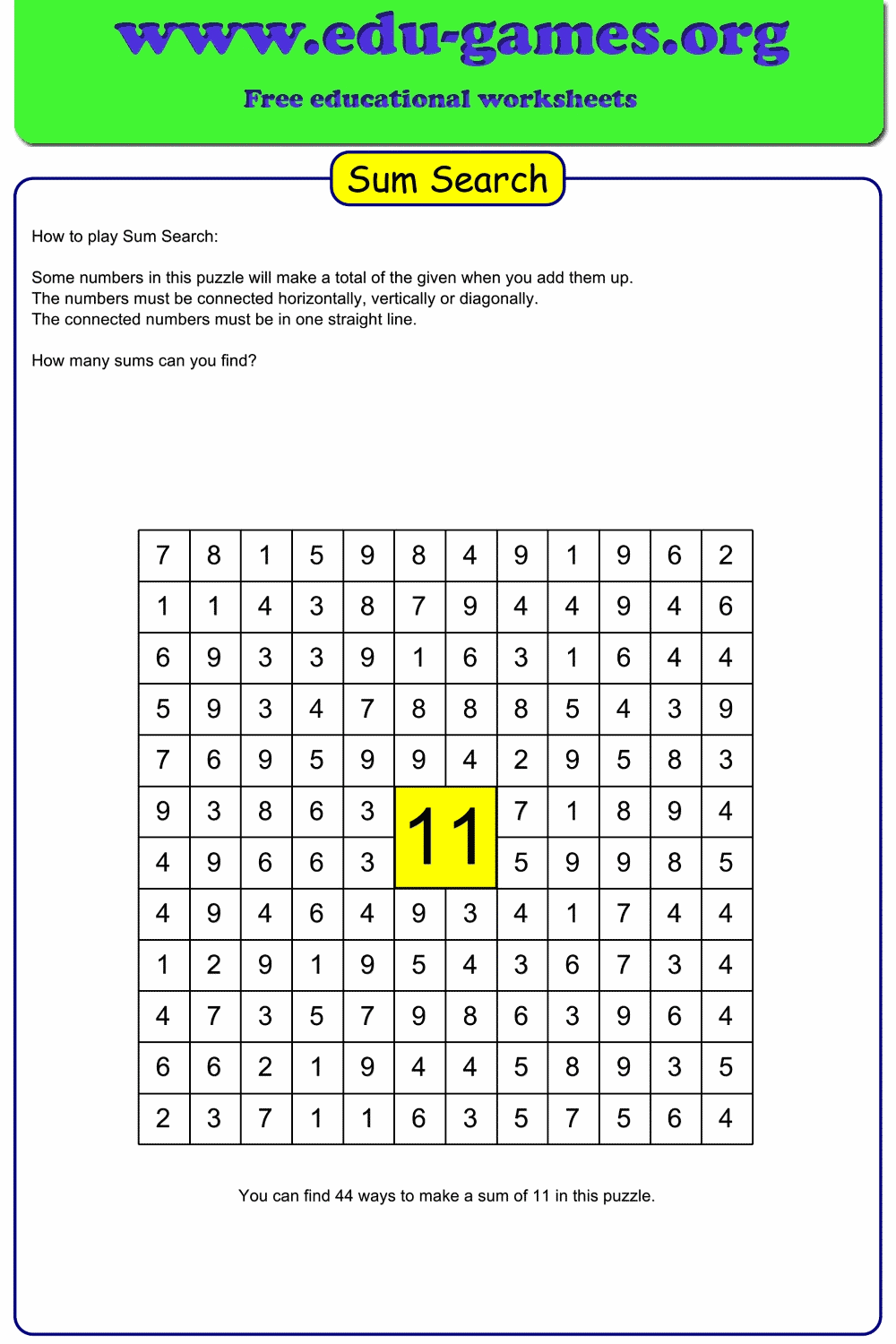
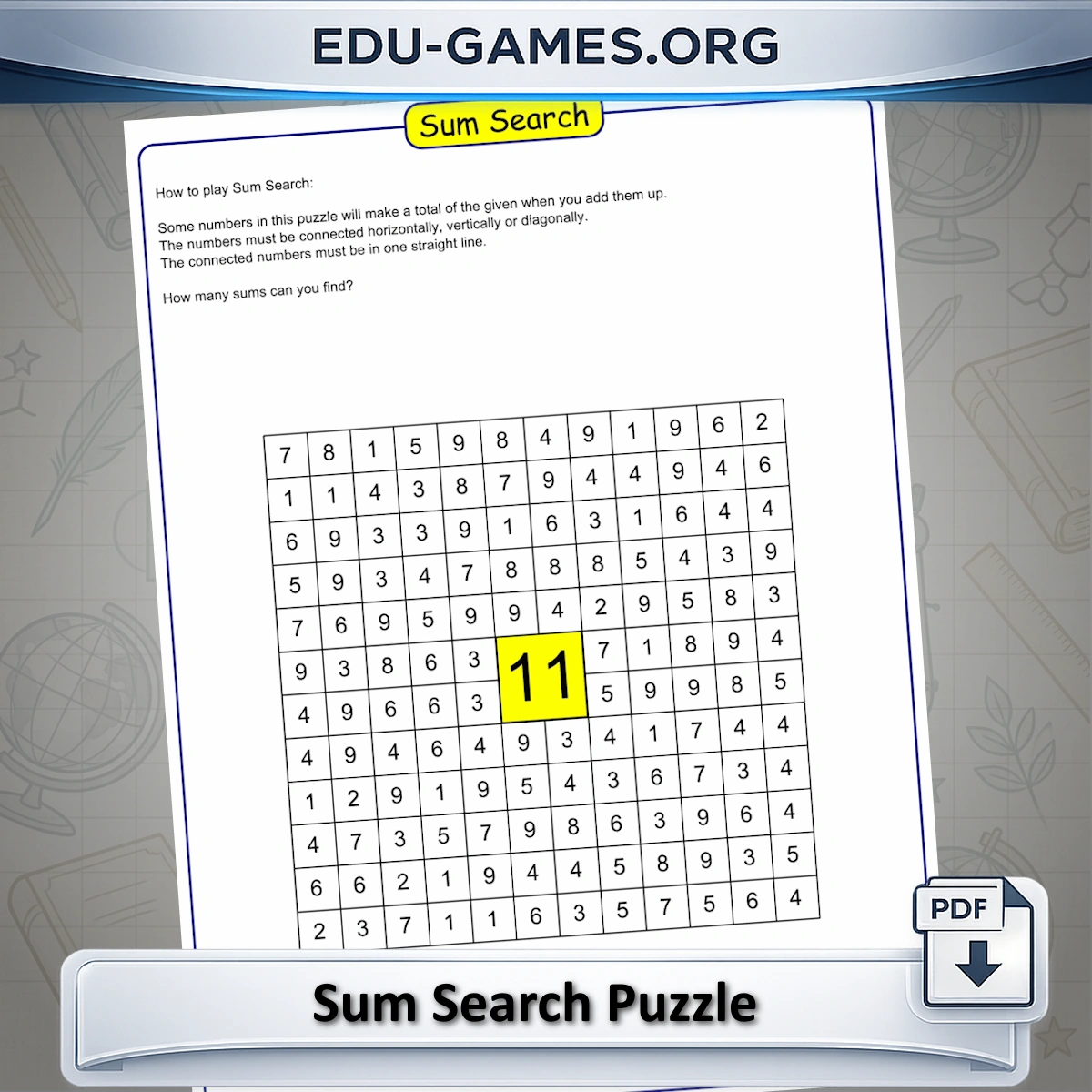
Generate free printable Addition Sum Search puzzles in seconds. Students find all chains of adjacent numbers — horizontal, vertical, or diagonal — that add up to the target sum. Choose the grid size and the target, then download a ready-to-print PDF.
1.7M+ worksheets downloaded · Instant PDF download · No account required
Create a printable Addition Sum Search puzzle
How to Use the Sum Search Worksheet Generator
Start by selecting the grid size — 8×8, 10×10, or 12×12. A larger grid produces a more challenging puzzle with more numbers to scan and more overlapping solution paths.
Next, set the sum: a target total between 5 and 25. Lower values (5–10) create shorter, easier chains; higher values (15–25) require students to find longer, more winding paths through the grid.
You can optionally edit the game instructions text that appears on the printed worksheet — for example, to translate it or simplify the wording for younger students.
Tick Color print if your printer supports colour. Uncheck it for a greyscale version that is easier on ink.
Click Generate a New Sum Search Puzzle to create a unique randomised puzzle. When you are satisfied, click Download the Sum Search Puzzle in PDF. Every click produces a completely new grid, so you can generate as many unique worksheets as you need.
Why Use Addition Sum Search Puzzles?
Standard addition drills ask students to compute a given sum — the problem and the answer format are both fixed. Sum Search flips this: students are given the target total and must find the calculations themselves. This demands a fundamentally different kind of thinking — scanning, estimating, and mentally adding chains of numbers rather than following a fixed procedure.
Because chains can run in any direction and the same number can appear in multiple solutions, the puzzle rewards systematic search strategies rather than luck. Students who approach it randomly tend to miss solutions; students who develop a scanning pattern find them all. This makes Sum Search a natural context for discussing problem-solving strategies in class.
The generator produces a different puzzle every time, so you can use it for classwork, homework, and review across the full school year without repeating the same grid. No preparation time is needed: open the page, choose your settings, and download.
Share this free addition sum search worksheet maker with your friends