What Is an Arithmetic Crossword Puzzle?
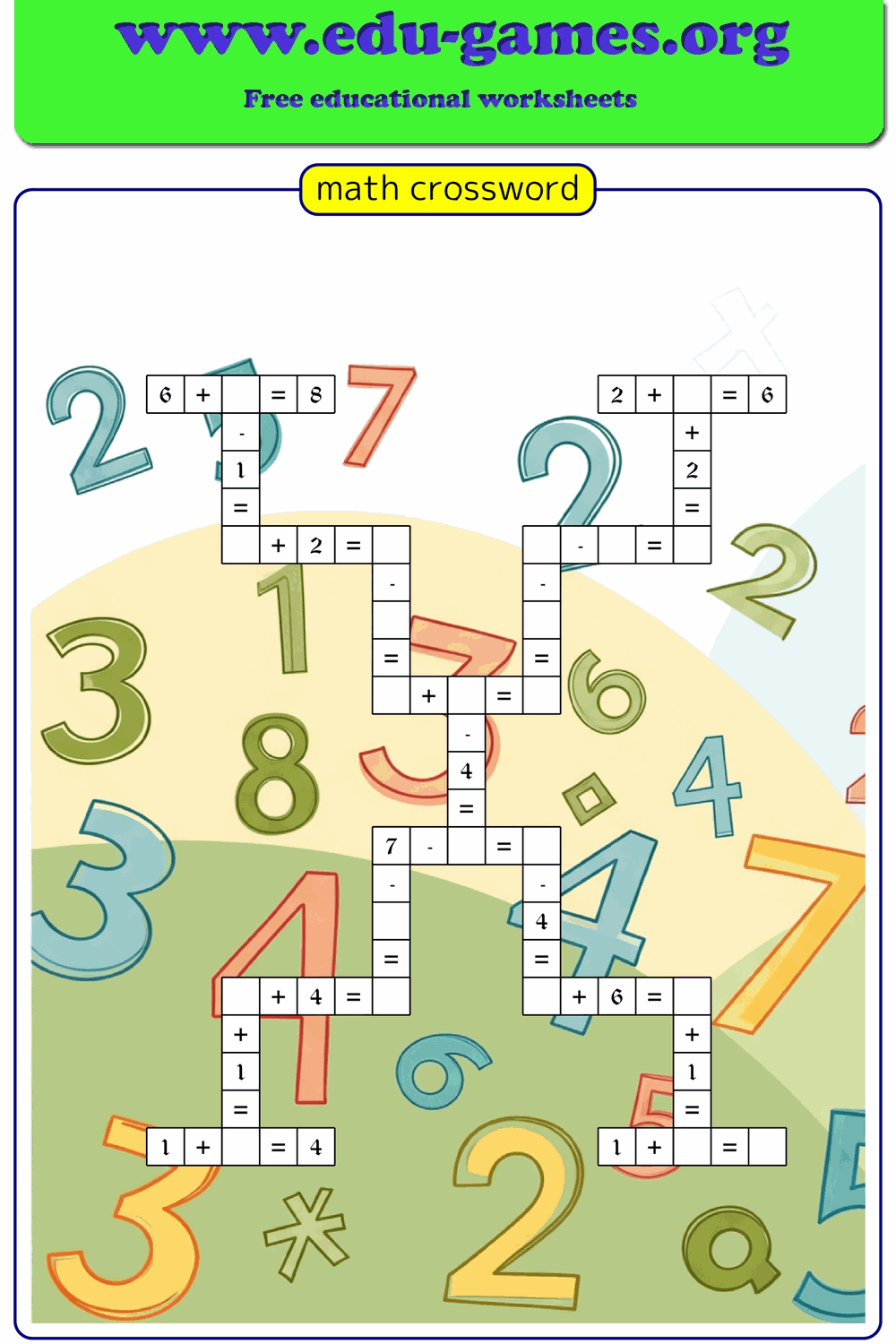
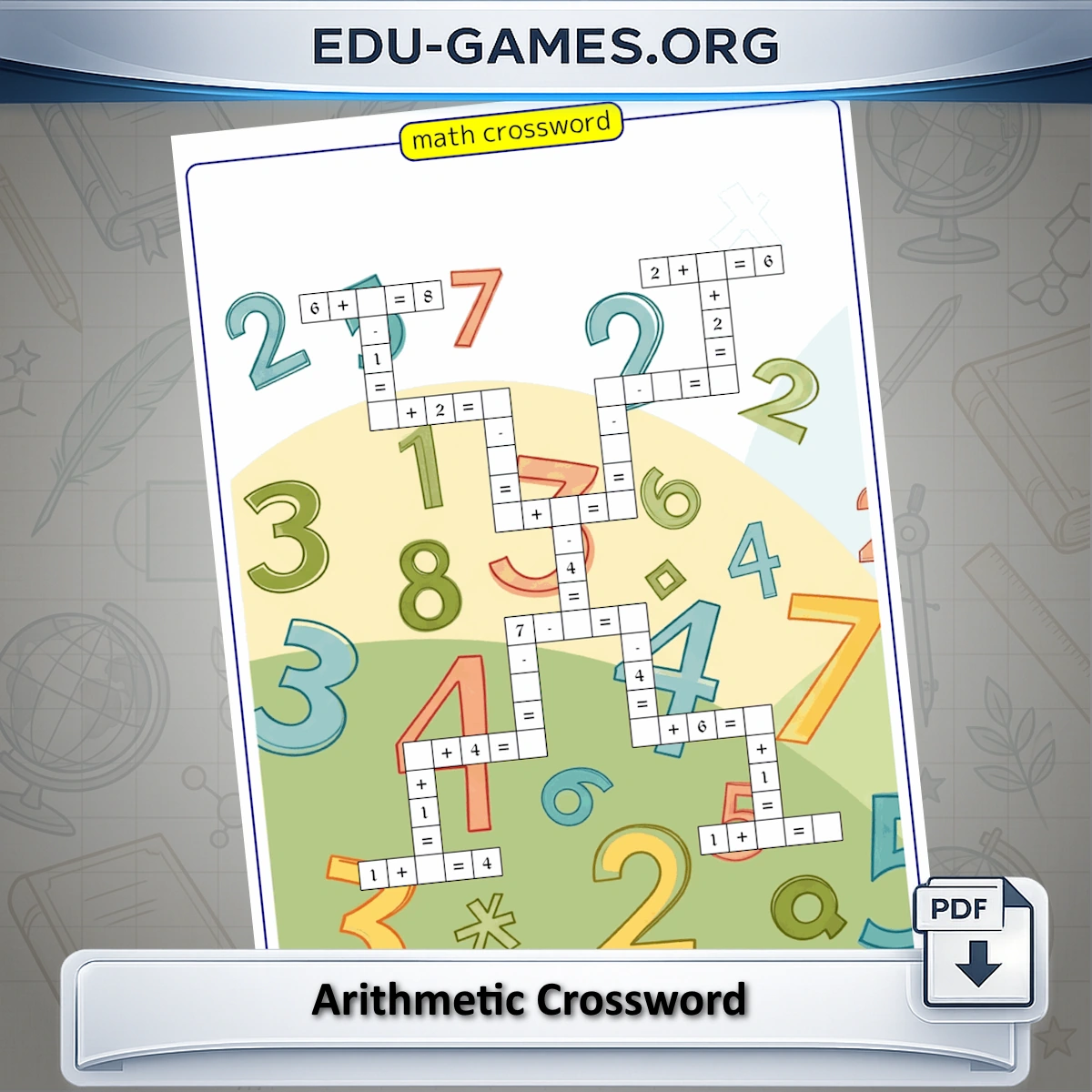
An arithmetic crossword uses a grid just like a standard word crossword, but single-digit numbers fill the cells instead of letters. Each row and each column contains a simple addition or subtraction equation. Some cells are pre-filled; students must work out the values of the blank cells.
The challenge is that cells at the intersection of a row and a column must satisfy both equations simultaneously. Students cannot fill in a random number — they must find the value that makes both the across equation and the down equation correct. This turns routine arithmetic practice into a logical puzzle.
How to Use the Puzzle Maker
- Set the max value: Enter a number in the "Max value for the sums" field. This controls the largest total any equation can reach. A max of 9 keeps all sums within single digits — ideal for Grade 1–2. A max of 15 or 18 challenges Grade 3 students working beyond 10.
- Create the puzzle: Click the Create button to generate a new unique puzzle. A fresh random crossword appears in the preview every time.
- Check with the solution: Click "Show solution" to see the completed grid. Use this to verify students' answers or to check the puzzle before printing.
- Download the PDF: Click the download button to save a print-ready PDF. The puzzle and solution can each appear on a separate page.
- Repeat for new puzzles: Every click generates a completely different puzzle — you never run out of unique crosswords to print.
Why Use Arithmetic Crossword Puzzles?
- Builds reasoning alongside fact recall: The intersection constraint means students cannot guess — they must check each number against two equations. This develops checking habits that transfer to all written arithmetic.
- Makes drill engaging: Early learners who lose focus on traditional worksheets stay motivated by the puzzle format. Completing the grid feels like winning a game, not finishing a test.
- Covers Grade 1–3 addition and subtraction: Adjust the max value to match the curriculum stage — single-digit sums for Grade 1, sums to 20 for Grade 2–3.
- Works across and down simultaneously: Students practise equations in both orientations within the same puzzle, reinforcing that 3 + 4 = 7 reads the same left-to-right and top-to-bottom.
- Unlimited unique puzzles: Every generation produces a different random grid, so you can assign a new puzzle every lesson without repeating.
Arithmetic Crossword Puzzle — Frequently Asked Questions
What is an arithmetic crossword puzzle?
An arithmetic crossword looks like a standard crossword grid, but instead of words, numbers fill the cells. Each row and column contains an equation — for example "3 + ? = 7" — and the blank cells must be filled in. Some cells appear in both a row and a column equation, so the same digit must satisfy two equations at once, which requires logical reasoning alongside basic arithmetic.What grade levels are arithmetic crossword puzzles designed for?
The generator is designed for Grades 1–3. Grade 1 students work with small sums (max value 5–9) to build fact fluency. Grades 2–3 students can raise the max value for greater challenge. The crossword format is accessible to early learners while remaining engaging for students who have already mastered basic addition and subtraction facts.What does "Max value for the sums" control?
This setting determines the largest total that any equation in the puzzle can reach. Setting it to 9 limits all sums to single-digit results — suitable for Grade 1–2 students practising within 10. Raising it to 15 or 18 introduces double-digit sums appropriate for Grade 3 students working beyond basic facts.How does the crossword format help students learn arithmetic?
The grid forces students to think in two directions at once. A number placed in a shared cell must satisfy both its row equation and its column equation. This eliminates random guessing — students must test a value and revise it if it breaks the crossing equation. The result is richer mathematical reasoning than a standard drill worksheet provides.What operations appear in arithmetic crossword puzzles?
This generator uses addition and subtraction. Each equation is a simple two-operand problem (a + b = c or a − b = c) with one value missing. The combination of + and − across and down the grid creates variety within each puzzle without introducing multiplication or division.Can I make the puzzle easier or harder?
Yes. Lower the max value for simpler problems with small numbers — ideal for Grade 1 students still building fact fluency. Raise the max value to increase the sums involved, which is suitable for Grade 3 students working with numbers beyond 10. Every click generates a completely new random puzzle within the range you set.Share this free arithmetic crossword puzzle maker