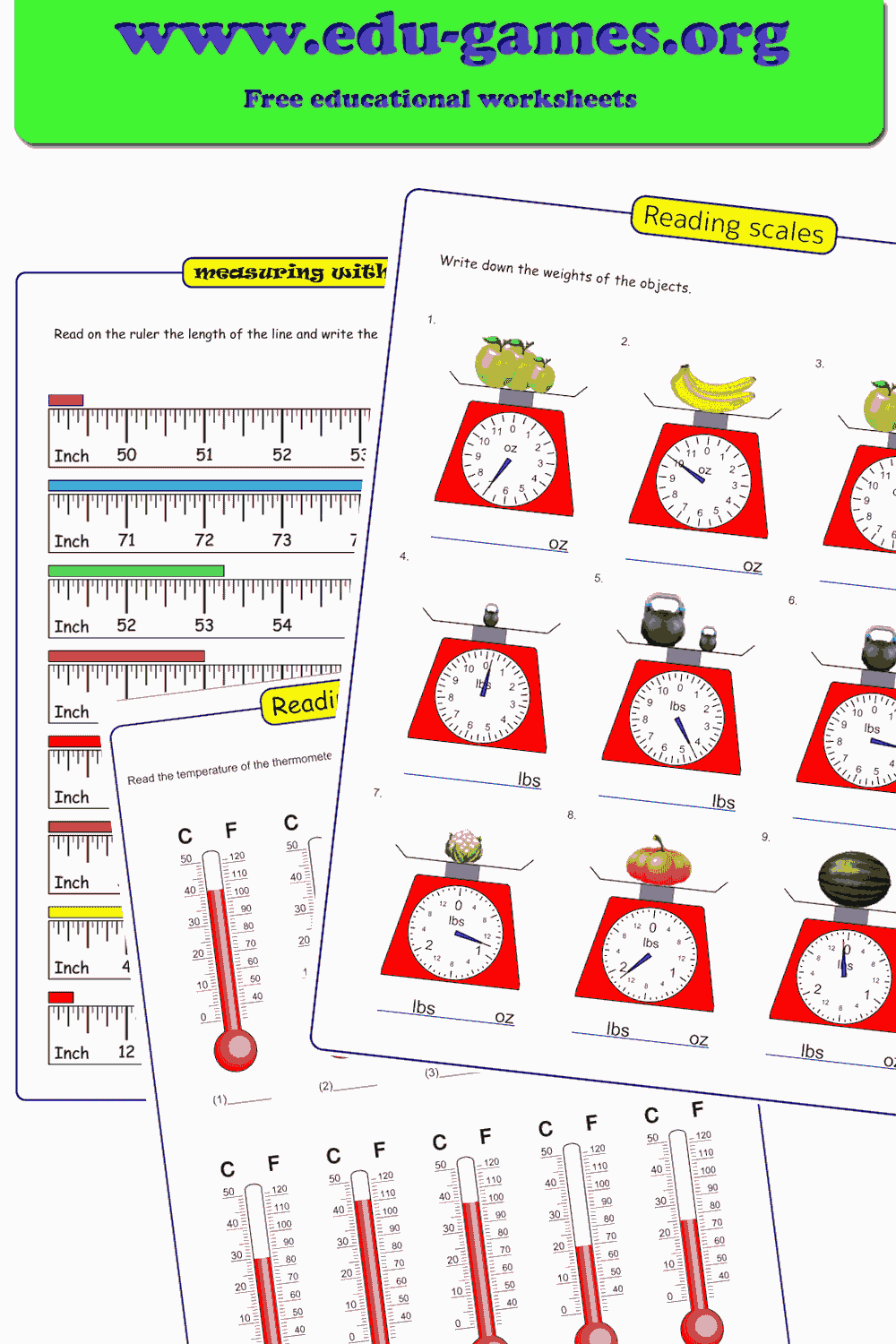
Grade 2 introduces standard-unit measurement for the first time — rulers for length, scales for weight, thermometers for temperature. These free printable measurement worksheet generators cover all three measurement types in both customary and metric units. The ruler generator aligns directly with CCSS 2.MD.1 (and supports 2.MD.2 by switching between unit systems); the weight and temperature generators address skills that appear in many Grade 2 curricula outside the Common Core and are frequently taught alongside the CCSS length standards. Click Generate and a print-ready PDF appears instantly — complete with an answer key. No sign-up, no account, no limit on how many times you generate.
Free Printable Measurement Worksheets for Grade 2
Measuring Cups
Grades 2, 3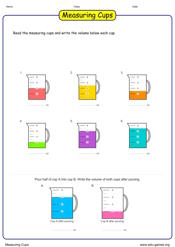
Create and download free printable measuring cup worksheets. Students read liquid volumes from illustrated cups in fluid ounces or milliliters, then complete a hands-on pour activity at the bottom of the page. Each worksheet is unique and ready to print in seconds.
Reading a Ruler
Grade 2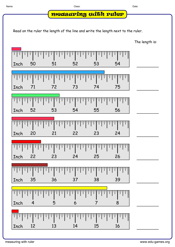
Nine rulers, nine lines to measure — how accurate can your students be? Choose metric or imperial units and set the precision level from whole inches all the way down to 1/16 inch. A practical, real-world measurement skill that builds precision and attention to detail.
Reading scale
Grade 2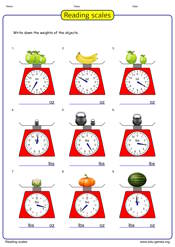
How heavy is it? Young learners read the weight shown on a printed scale and write their answer — choosing between customary (lbs and oz) or metric (kg and grams) units. A practical, real-world measurement skill brought to life through a thoughtfully designed interactive worksheet generator.
Reading Thermometers
Grades 1, 2, 3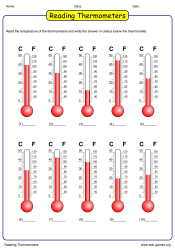
High-quality thermometer worksheets you can fully customize! Choose Celsius, Fahrenheit, or both, and select from temperature ranges like 0–50°, 0–100°, or −50 to 50°. A practical, real-world measurement skill that connects classroom math to everyday science and weather observation.
How to Use the Grade 2 Measurement Generators
The ruler generator presents an object on a printed ruler and asks students to read the length. The primary setting is the unit — customary (inches or feet) or metric (centimeters or meters). To address 2.MD.2 alongside 2.MD.1, generate the same worksheet twice with different unit settings and present them back-to-back: students measure in inches on one sheet and in centimeters on the other, then discuss why the two numbers differ for the same object.
Why Standard-Unit Measurement Matters in Grade 2
Before Grade 2, students measure informally — counting steps, using paper clips, comparing hand spans. Grade 2 is when standard units are introduced for the first time, and the core conceptual shift is significant: the unit must be consistent across all measurements for comparisons to be meaningful. A length measured in "small cubes" and a length measured in "large cubes" cannot be directly compared, but a length in centimeters and a length in centimeters always can. Students who do not grasp this principle will make errors in every measurement context they encounter in Grades 3–6.
The dual-unit requirement in Grade 2 (both customary and metric) is often treated as an administrative overhead — "now do it in centimeters too" — but it serves a specific purpose. Measuring the same object in inches and in centimeters, and understanding why the centimeter number is larger, builds the insight that unit size and measurement value move in opposite directions: smaller units produce larger numbers. This is prerequisite reasoning for fraction concepts in Grades 3–5, where denominator size and piece size work the same way.
Grade 3 measurement (perimeter 3.MD.8, area 3.MD.5–7) treats linear measurement as already-automatic. Students who are still uncertain about which end of the ruler to start from, or which unit to use for a given object, will be slowed down by that uncertainty every time a Grade 3 geometry problem involves measuring a side. The time spent on Grade 2 measurement practice has a direct payoff in Grade 3 mathematical fluency.
Weight and temperature reading are not in CCSS 2.MD — the Common Core standard for Grade 2 focuses exclusively on length. They are included here because they appear in many state and district curricula at Grade 2, and because the underlying skill — reading a graduated scale and identifying the value the pointer or liquid level indicates — transfers directly to reading rulers and number lines. A student who can read a thermometer scale to the nearest two degrees has already built the scale-reading skill that length measurement on a ruler uses. Treating all three measurement types together, rather than in isolation, reinforces that common skill rather than teaching three disconnected procedures.
Share these free Grade 2 measurement worksheets