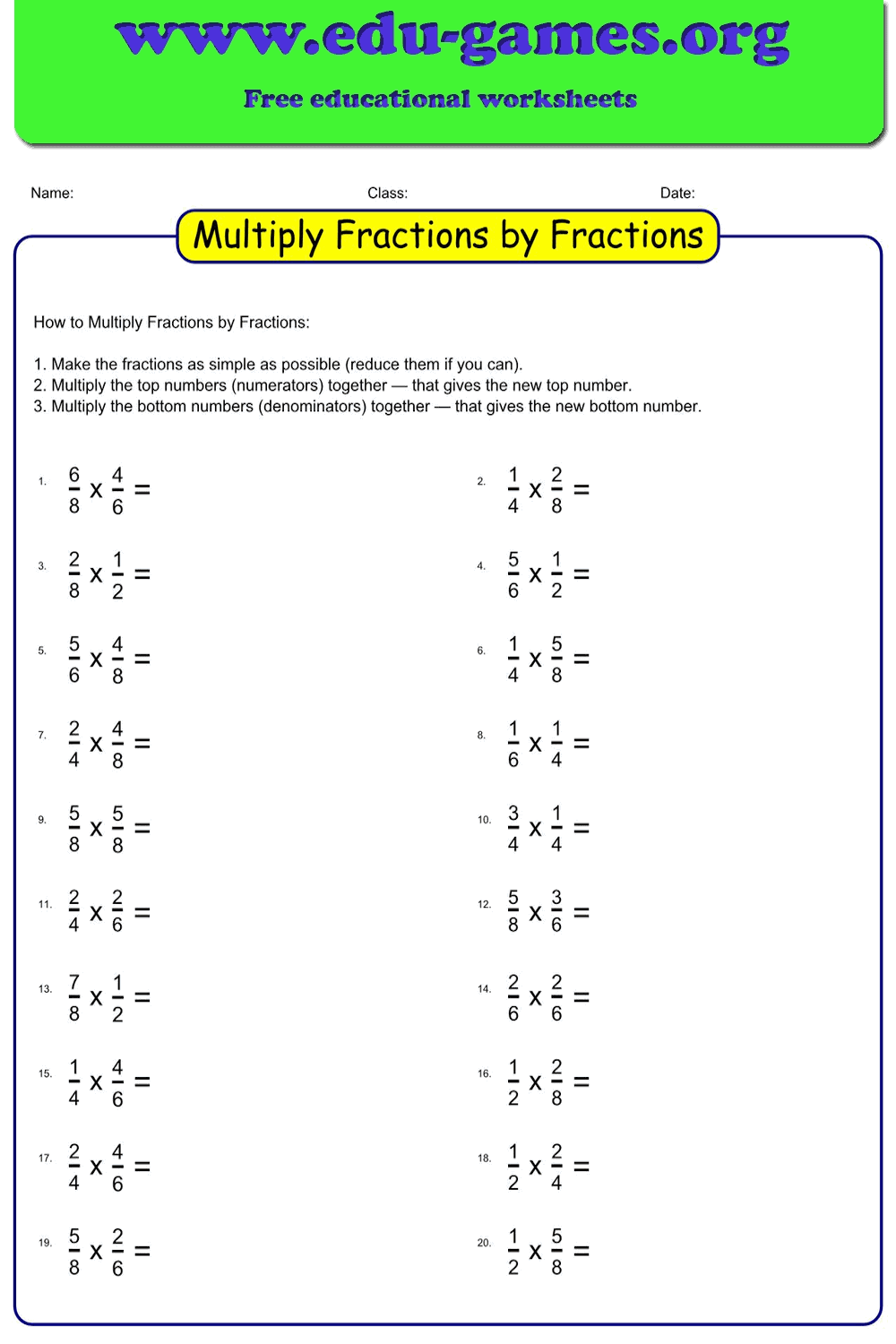
How to Multiply Fractions by Fractions
To multiply two fractions, follow these steps:
- Simplify first (optional but recommended): Reduce either fraction, or cross-cancel common factors between a numerator of one fraction and the denominator of the other. This keeps the numbers small.
- Multiply straight across: Multiply the two numerators together to get the new numerator. Multiply the two denominators together to get the new denominator.
- Simplify the result: Reduce the fraction to its lowest terms. If the numerator is larger than the denominator, convert it to a mixed number.
Worked example: 2/3 × 4/5
- No common factors to cancel.
- Multiply: (2 × 4) / (3 × 5) = 8/15
- 8/15 is already in lowest terms. Answer: 8/15
Cross-cancellation example: 2/3 × 3/8 — the 3s cancel, giving 2/1 × 1/8 = 2/8 = 1/4.
Why Use This Worksheet Generator?
- Full control over difficulty: Set the numerator and denominator ranges independently. Start with small numbers for beginners and increase the range as students build confidence.
- Unlimited unique worksheets: Each click produces a fresh random set of problems within the ranges you specify. Use different worksheets for classwork, homework, and re-test practice without repeating the same set.
- Ready-to-print PDF: Download a clean, print-ready PDF that fits standard A4 and US letter paper. No formatting work needed.
- Free with no account: No registration, no subscription. Open the generator, choose your settings, generate, and download.
Multiplying Fractions by Fractions — Frequently Asked Questions
How do you multiply two fractions?
Multiply the numerators together to get the new numerator, then multiply the denominators together to get the new denominator. Simplify the result and, if needed, convert any improper fraction into a mixed number. Example: 2/3 × 4/5 = (2×4)/(3×5) = 8/15.Do I need a common denominator to multiply fractions?
No. Unlike adding or subtracting fractions, multiplying fractions does not require a common denominator. You simply multiply straight across — numerator × numerator and denominator × denominator.What is cross-cancellation and how does it help?
Cross-cancellation means simplifying common factors between a numerator of one fraction and a denominator of the other before multiplying. This keeps the numbers smaller and makes simplification easier at the end. For example, in 2/3 × 3/8 the 3s cancel, leaving 2/1 × 1/8 = 2/8 = 1/4.What if the product is an improper fraction?
If your answer is an improper fraction (numerator ≥ denominator), you can leave it as is or convert it to a mixed number by dividing the numerator by the denominator. For example, 12/5 = 2 2/5.What grade level covers multiplying fractions by fractions?
Multiplying fractions is typically introduced in Grade 5 and practised through Grade 6. Students should already understand what fractions represent and be comfortable with multiplication of whole numbers before starting this topic.Can I adjust the difficulty of the problems?
Yes. Use the numerator and denominator range controls to set the minimum and maximum values. Smaller ranges produce simpler problems for beginners; larger ranges give more advanced students a greater challenge. Every click generates a new random set within the ranges you set.Share these free multiplying fractions worksheets with your friends