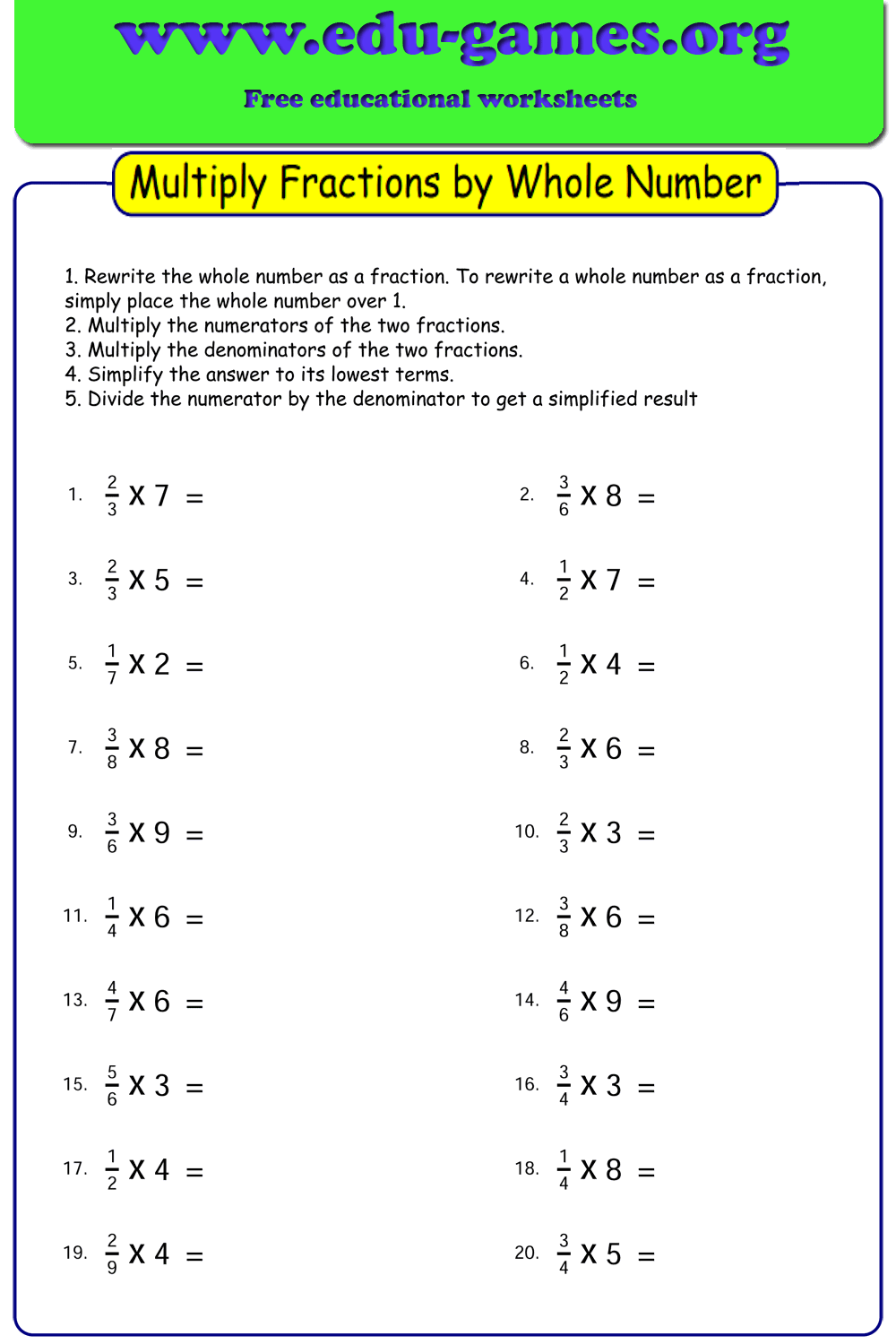
How to Multiply Fractions by Whole Numbers
To multiply a fraction by a whole number, use the whole number over 1 method and then multiply straight across:
- Rewrite the whole number as a fraction by placing it over 1. Example: 7 becomes 7/1.
- Multiply the numerators: multiply the top numbers together.
- Multiply the denominators: multiply the bottom numbers together (the denominator stays the same because you multiply by 1).
- Simplify the result and convert to a mixed number if the fraction is improper.
Worked example: 3/5 × 7
- Rewrite: 3/5 × 7/1
- Multiply numerators: 3 × 7 = 21
- Multiply denominators: 5 × 1 = 5
- Result: 21/5 = 4 1/5
Why Use This Worksheet Generator?
- Targeted control: Set the denominator range and the whole number range separately so problems match exactly what students are ready for — small numbers for first encounters, larger numbers for fluency practice.
- Unlimited unique worksheets: Every click generates a fresh random set of problems within your settings. Create separate worksheets for classwork, homework, and re-test practice without repeating the same problems.
- Ready-to-print PDF: Download a clean, print-ready PDF that fits standard A4 and US letter paper. No formatting or preparation needed.
- Free with no account: No registration, no subscription. Open the generator, set your options, generate, and download.
Multiplying Fractions by Whole Numbers — Frequently Asked Questions
How do you multiply a fraction by a whole number?
Rewrite the whole number as a fraction over 1, then multiply the numerators together and the denominators together. Simplify the result and convert any improper fraction to a mixed number. Example: 3/5 × 7 = 3/5 × 7/1 = 21/5 = 4 1/5.Why do you write the whole number over 1?
Writing a whole number as a fraction over 1 (e.g., 7 = 7/1) lets you apply the standard fraction multiplication rule — multiply across. The denominator stays 1, which is why multiplying a fraction by a whole number simply multiplies the numerator.What if the result is an improper fraction?
Divide the numerator by the denominator to find the whole number part; the remainder becomes the new numerator over the same denominator. For example, 21/5 = 4 remainder 1, so the answer is 4 1/5.What is the difference between multiplying a fraction by a whole number and multiplying two fractions?
When multiplying two fractions, both numerator and denominator change. When multiplying a fraction by a whole number, only the numerator changes — the denominator stays the same because the whole number's denominator is 1. The result is always a larger fraction (or equal if the whole number is 1).What grade level covers multiplying fractions by whole numbers?
Multiplying fractions by whole numbers is introduced in Grade 4 and extended in Grade 5. It is a foundational step before learning to multiply two fractions together or working with mixed numbers.Can I adjust the difficulty of the problems?
Yes. Use the denominator range control to set which denominators appear, and the whole numbers field to set the range of whole numbers used. Smaller values give simpler problems for beginners; larger ranges create more challenging practice.Share these free multiplying fractions worksheets with your friends