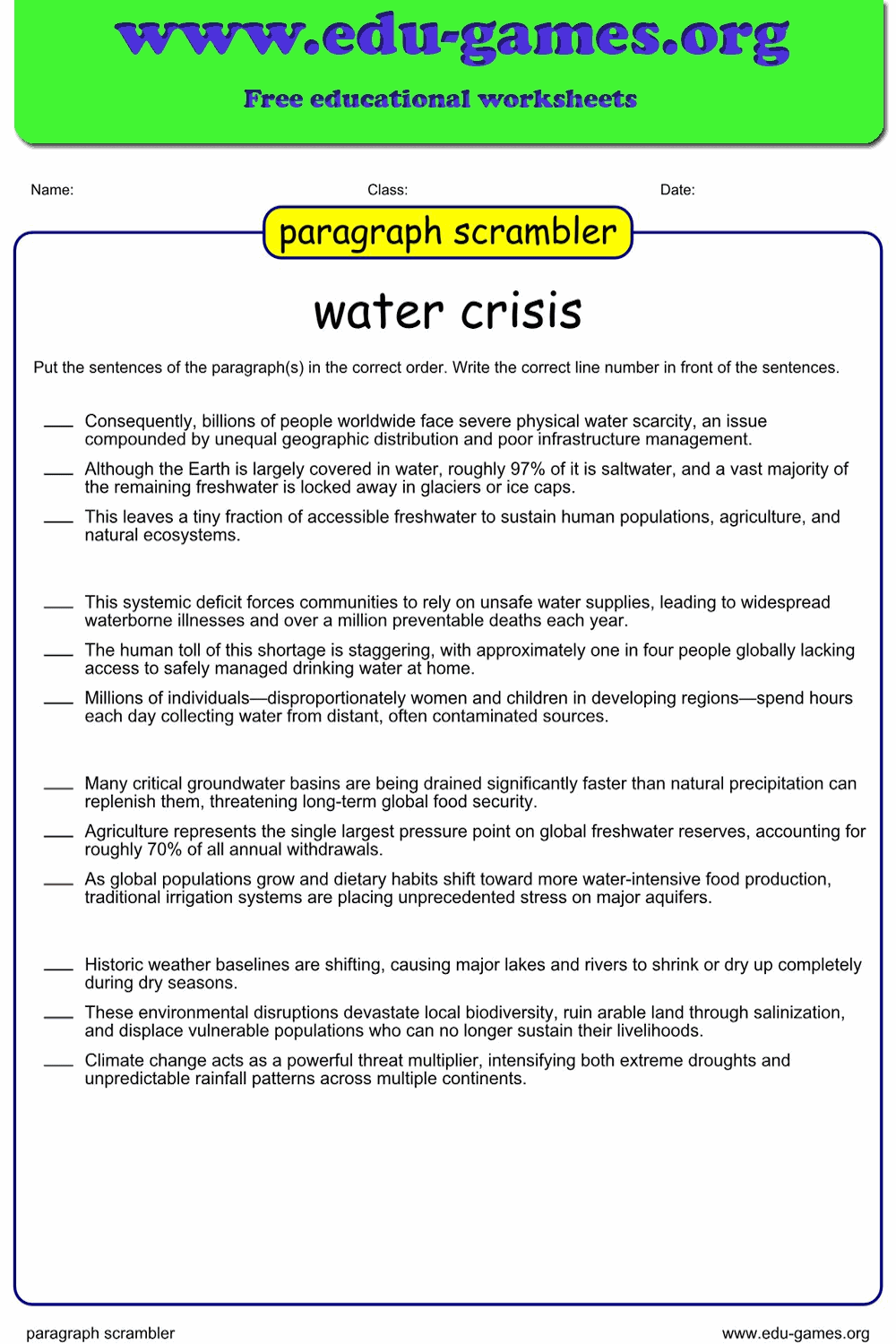
Free Paragraph Scrambler — Printable Worksheet Maker
Scramble any paragraph and challenge students to restore the correct sentence order. Paste your own text or pick from the built-in library, adjust the difficulty, and download a print-ready PDF in seconds. No account needed.
1.7M+ worksheets downloaded · Instant PDF download · No account required
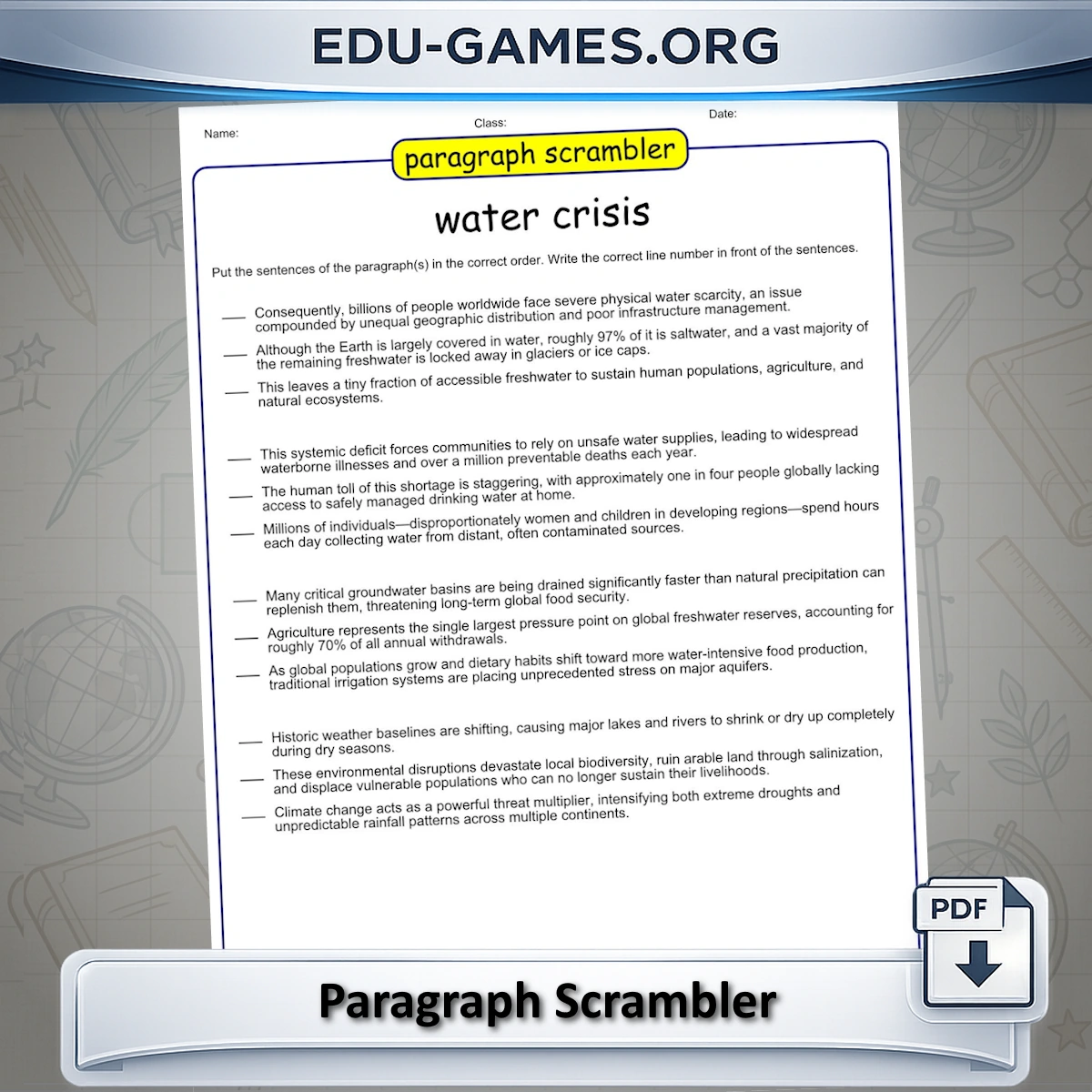
Create your paragraph scramble worksheet
How to Use the Paragraph Scrambler
Step 1 — Enter a Title
Give your worksheet a title that reflects the topic or text you are using. The title appears at the top of the printed worksheet and helps students understand the context.
Step 2 — Paste Your Paragraph
Type or paste any paragraph into the text box. Each sentence will be treated as a separate unit. You can use a pre-loaded example or replace it entirely with your own text — news articles, textbook excerpts, or any passage relevant to your lesson.
Step 3 — Scramble the Sentences
Click "Scramble all sentences". The generator shuffles the sentences within each paragraph block and displays them in the scrambled order. Students must write the correct line numbers to restore the original sequence.
Step 4 — Download as PDF
Click "Download the scrambled puzzle" to save a print-ready PDF worksheet. You can also save the puzzle to your account to reuse or share with other classes.
Why Use the Paragraph Scrambler?
The paragraph scrambler is one of the most effective activities for teaching text cohesion and reading comprehension. To rebuild the paragraph, students must understand the meaning of each sentence and follow the logical thread that connects them.
For Teachers
Use any classroom text — a history passage, a science explanation, a narrative extract — and turn it into a sequencing task in under a minute. The difficulty setting lets you leave some sentences in place as anchors for lower-ability students while presenting the full scramble to more advanced learners. No preparation beyond typing or pasting the text is required.
Why Sequencing Tasks Work
- Builds cohesion awareness: Students actively look for connectives, time markers, and logical links rather than just reading passively.
- Works with any subject: History, science, English, geography — any text with a clear logical sequence becomes a sequencing task.
- Adjustable difficulty: Control what percentage of sentences are scrambled to differentiate within a mixed-ability class.
- Free and unlimited: Download as many worksheets as you need — no account required.
Share this free paragraph scrambler