Create unlimited Sudoku and Sudoku-style math worksheets in seconds. Our free worksheet generators let teachers, parents, and students design printable logic puzzles at the right difficulty level — perfect for classroom use, homework, enrichment, or independent practice at home.
All generators on this page create ready-to-print PDF worksheets. No accounts, no subscriptions, and no ads on the worksheets — just clean, classroom-friendly puzzles you can use right away.
START GENERATING SUDOKU WORKSHEETSWhy use our Sudoku worksheet generators?
Sudoku-style puzzles are one of the most effective tools for building logical thinking in the classroom. They require no prior knowledge and work across a wide range of ages and ability levels.
- Four puzzle types: Classic sudoku, calcudoku, sum sudoku, and divide sudoku — each targeting different skills.
- Instant unique worksheets: Generate a new puzzle every time — no two worksheets are the same.
- Adjustable difficulty: Choose beginner, intermediate, or advanced to match your class level.
- Math and logic combined: The math-based variants reinforce arithmetic while training logical deduction.
- Differentiated instruction: Print different difficulty levels simultaneously for mixed-ability groups.
More than just classic Sudoku
In addition to traditional 9x9 Sudoku, this collection includes math-based variations that challenge students to apply arithmetic within a logical framework:
- Calcudoku: Cells are grouped into cages. The numbers in each cage must reach a target value using addition, subtraction, multiplication, or division.
- Sum Sudoku: Rows and columns must add up to a specific total, combining placement logic with mental addition.
- Divide Sudoku: A more advanced variant where division constraints guide the placement of numbers.
Because each worksheet is generated dynamically, you can print as many different versions as you need — ideal for differentiated instruction or preventing copied answers in class.
How to use these generators
- Choose a puzzle type from the list below (classic sudoku, calcudoku, sum sudoku, or divide sudoku).
- Select the difficulty level — beginner, intermediate, or advanced.
- Choose how many puzzles to include per page (typically 1 or 4).
- Click Generate to create a new unique puzzle.
- Download the PDF and print directly for classroom or home use.
Every time you click Generate, a brand new puzzle is created. You can generate as many different worksheets as you need without any repeats.
Explore our Printable Sudoku Worksheet Generators
Calcudoku
Grades 3, 4, 5, 6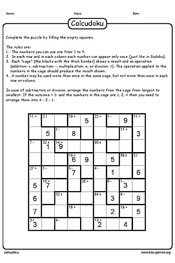
Sudoku meets arithmetic in this brain-bending puzzle! Fill the grid using Sudoku rules, but use the arithmetic clues inside each "cage" to figure out which numbers belong where. Every puzzle is a unique challenge that sharpens both logic and calculation skills simultaneously.
Divider sudoku
Grades 3, 4, 5, 6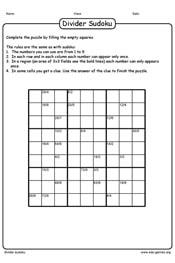
A clever twist on the classic Sudoku! Division problems are printed inside certain cells, and solving them reveals the key numbers you need to crack the entire puzzle. Perfect for students who are ready to take their Sudoku skills — and their division — to the next level.
Sudoku
Grades 3, 4, 5, 6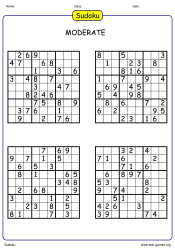
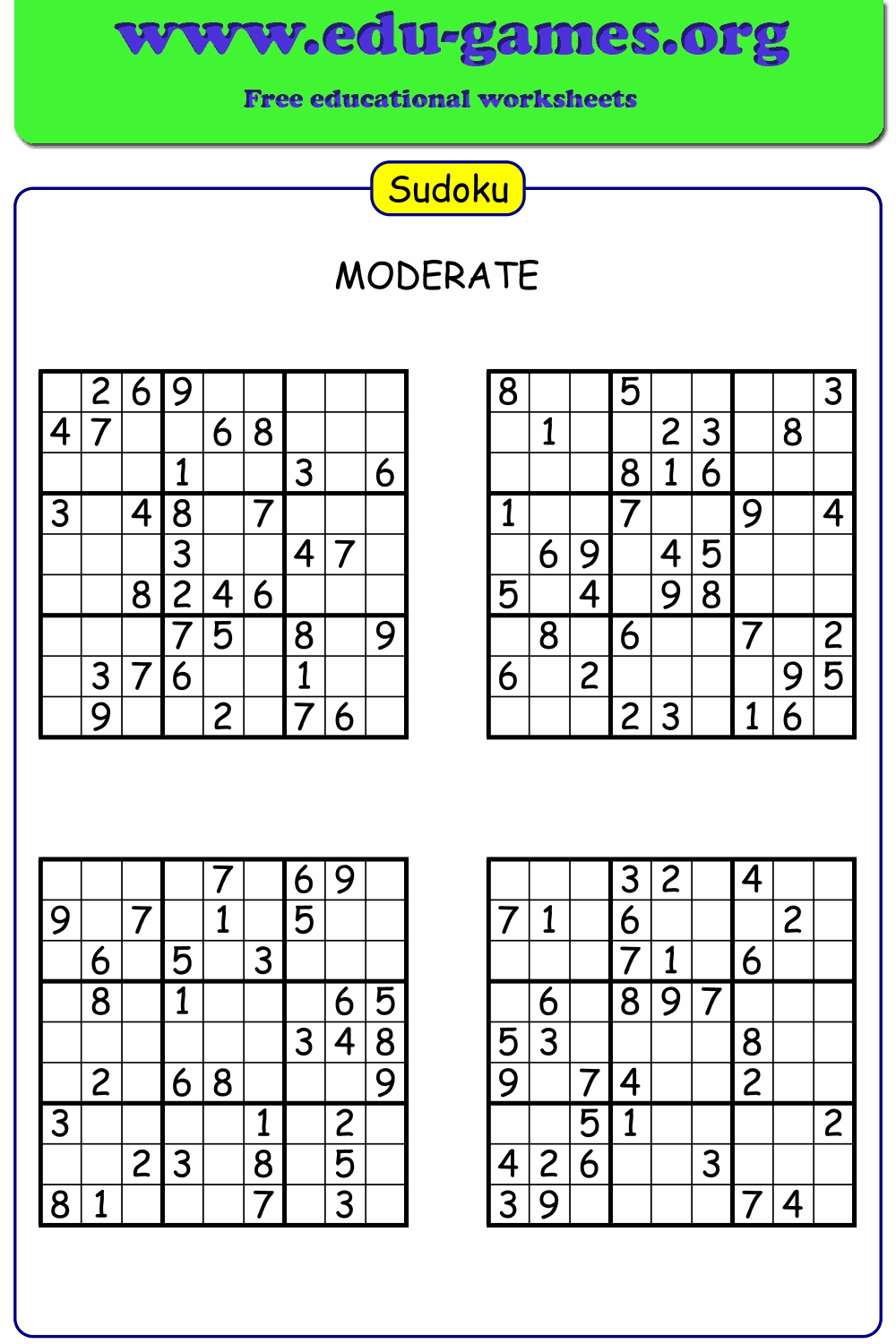
The world's most popular logic puzzle — now with an instant worksheet maker! Select your difficulty level and generate four unique Sudoku puzzles per sheet, complete with a full answer key. Perfect for fast finishers, homework, or a quiet classroom challenge.
Sum sudoku
Grades 3, 4, 5, 6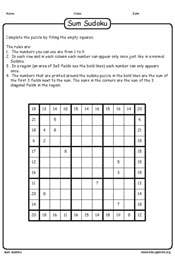
Think you know Sudoku? Think again! In Sum Sudoku, the totals of every group of three cells are printed around the puzzle, giving you just enough clues to crack the code. A fresh, rewarding challenge that combines addition with pure logic thinking.
Share free printable sudoku worksheets