Free Printable Comparing Fraction Circles Worksheet
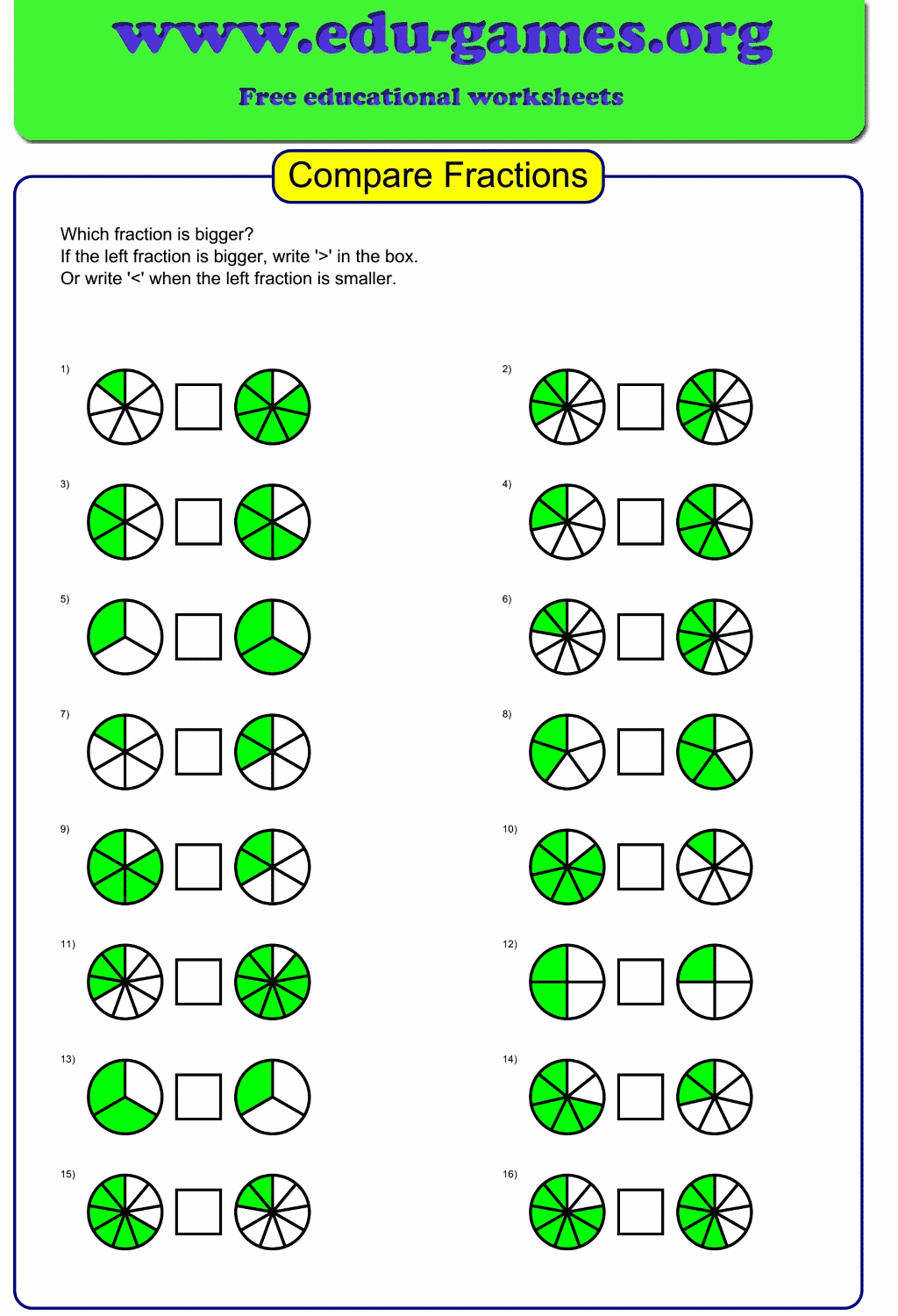
Build strong fraction sense with printable worksheets that use fraction circles to help students visually compare fractions. Ideal for 3rd grade classrooms, homework, or homeschooling.
Used by teachers worldwide · Instant PDF download · No account required
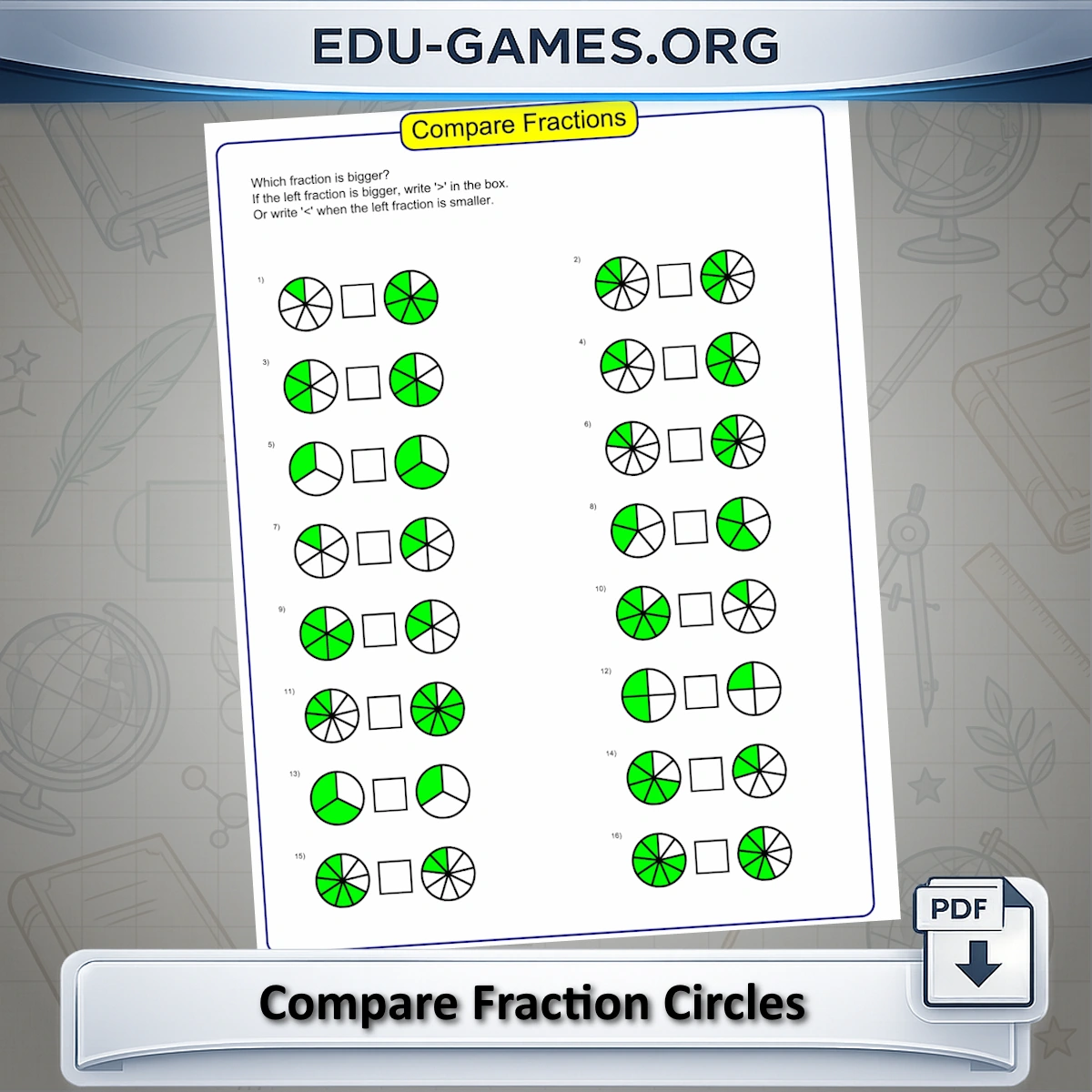
Create your Compare Fraction Circles Worksheet
Problems per page:
Include solution page
Paper format:
What Are Fraction Circles?
Fraction circles are circles divided into equal parts (halves, thirds, fourths, eighths, etc.). By placing these
models side by side, students can see which fraction is larger, smaller, or equivalent (e.g., 2/4 = 1/2).
Frequently Asked Questions
What is the difference between the Same Denominator, Same Numerator, and Random modes?
Same Denominator shows pairs like 3/8 vs 5/8 — students only need to compare the top numbers since the circle sections are the same size. Same Numerator shows pairs like 2/3 vs 2/5 — the top numbers match but the section sizes differ, so students must understand that a larger denominator means smaller pieces. Random mixes both types and may include pairs where neither the numerator nor the denominator matches.Why is Same Numerator harder than Same Denominator for most students?
With same denominators, students can simply pick the bigger top number. With same numerators — for example 1/3 vs 1/6 — the instinct to pick the larger number leads to the wrong answer. The fraction circles make this visible: a circle cut into 6 parts has smaller slices than one cut into 3, so 1/6 is clearly the smaller piece.What do students write in the box between the two circles?
Students write a greater-than or less-than symbol: > if the left fraction is bigger, or < if the left fraction is smaller. The default instructions on the worksheet explain this, and you can edit them before downloading.Why do 10-problem worksheets show larger circles than 16 or 20?
With fewer problems on the page, each circle is drawn bigger. At 10 problems, there is also extra space below each pair — useful when you want students to write the fraction notation themselves rather than only marking the comparison symbol.Share this free compare fraction circles worksheet