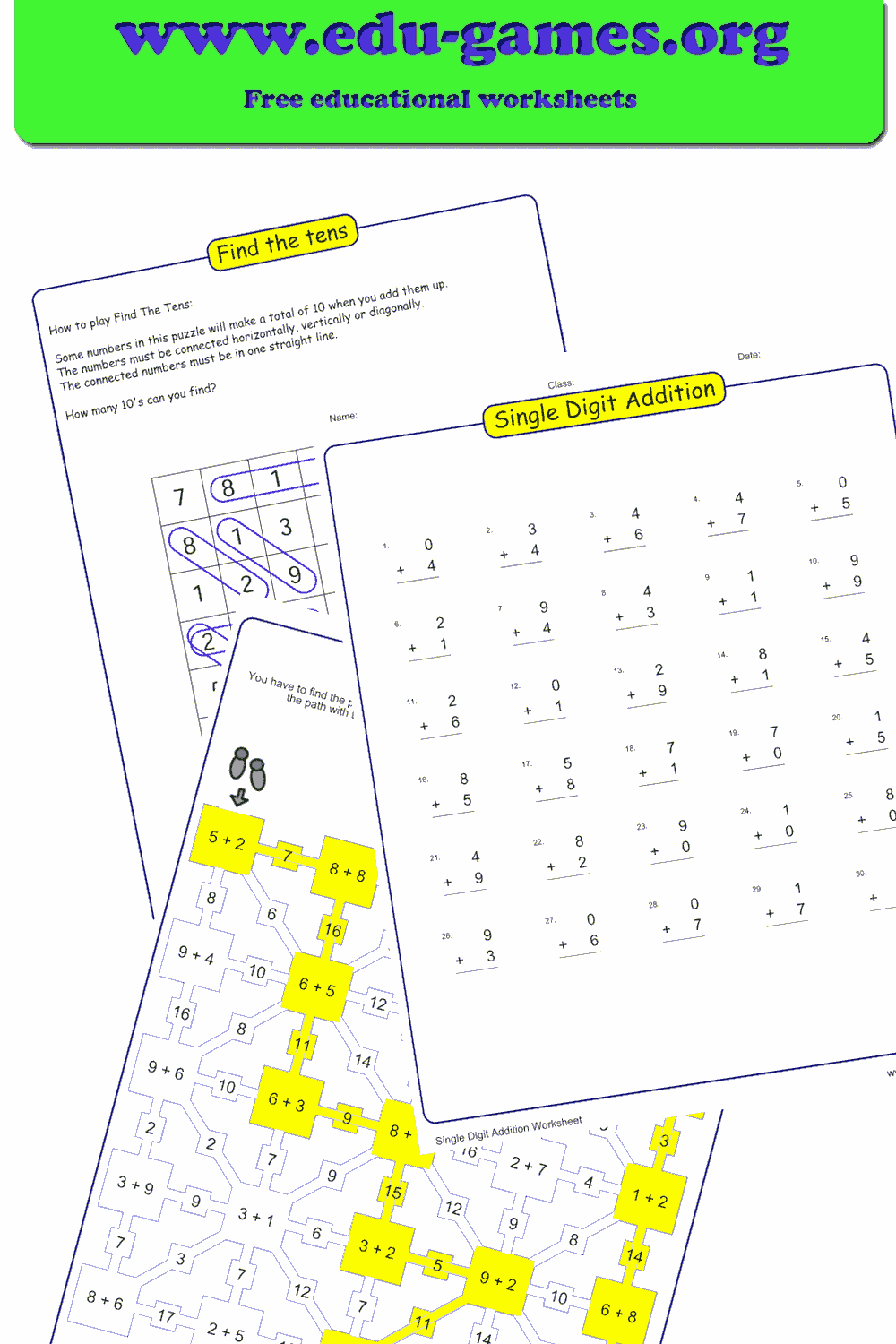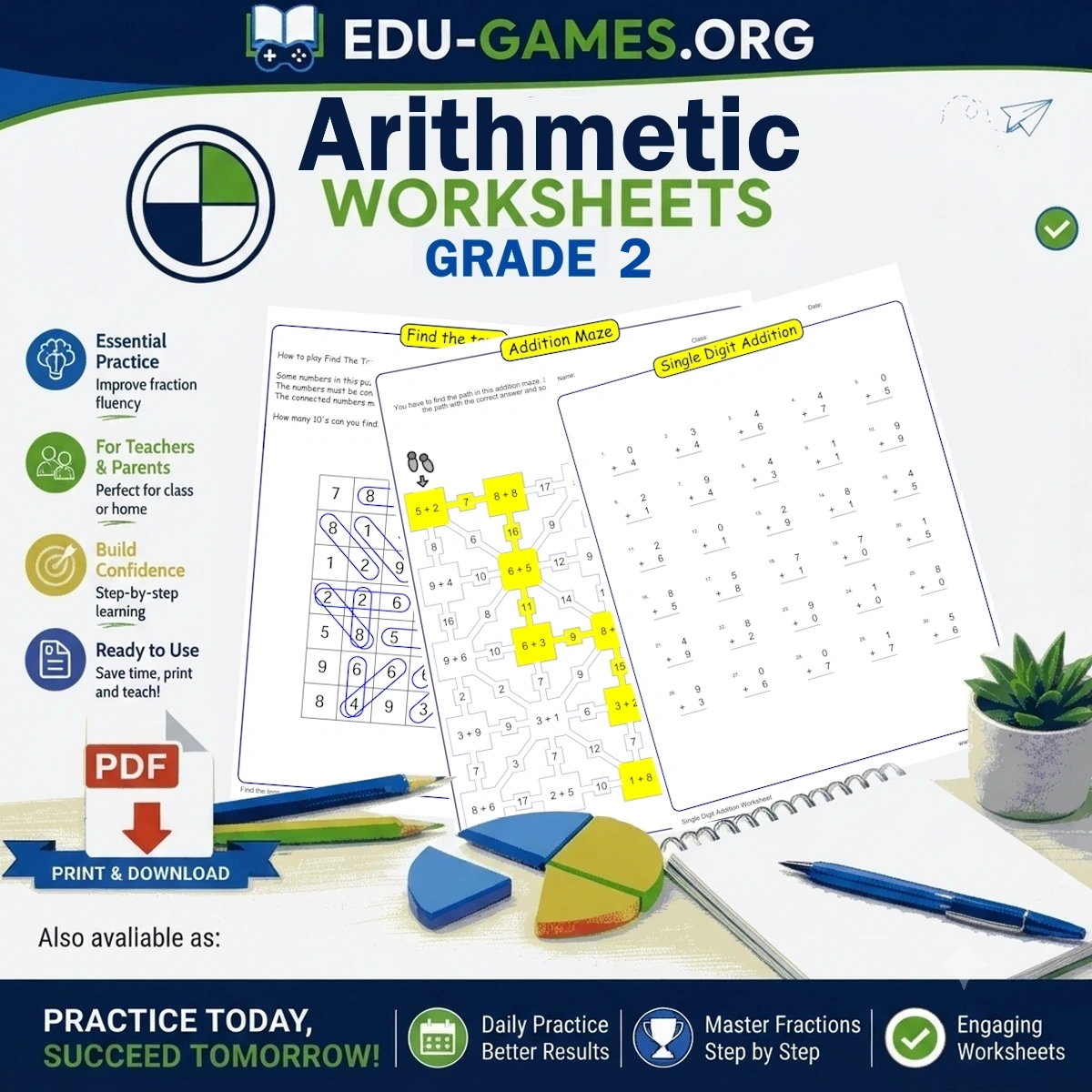
Grade 2 is when arithmetic expands in two directions at once: addition and subtraction facts must become automatic within 20, while the number range simultaneously extends to 1,000 using place-value strategies. These free printable arithmetic worksheet generators let you target each of those skills separately. Click Generate and a print-ready PDF appears instantly — complete with an answer key. No sign-up, no account, no limit on how many times you generate.
What Grade 2 Arithmetic Covers — Common Core Standards
- Operations & Algebraic Thinking (2.OA)
- Fluently add and subtract within 20; know all sums of two one-digit numbers from memory by end of Grade 2 (2.OA.2)
- Number & Operations in Base Ten (2.NBT)
- Fluently add and subtract within 100 (2.NBT.5); add and subtract within 1,000 using place-value strategies (2.NBT.7)
Free Printable Arithmetic Worksheets for Grade 2
Addition Battle
Grades 1, 2, 3, 4, 5, 6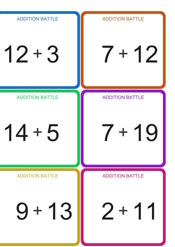
Turn addition practice into a fast-paced math game! Addition Battle is a printable card game that gives students repeated practice addition while they compete to find the highest sum. Generate a fresh set of cards in seconds, customize the difficulty, print, cut, and play.
Addition Bingo
Grades 2, 3, 4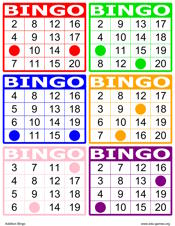
Create Addition Bingo cards for a small-group math game. Players take turns drawing two number cards, add them to create a addition question, and check their own bingo cards for the answer. The students run the game themselves
Addition Maze
Grades 1, 2, 3, 4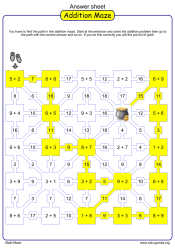
Solve the addition problem, follow the correct answer, and navigate your way through the maze — all the way to a pot of gold! A motivating, adventure-style addition activity that keeps students solving problems because they genuinely want to find the way out.
Addition Squares
Grades 2, 3, 4, 5, 6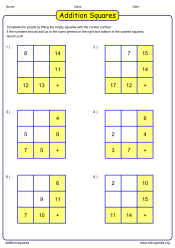
A satisfying logic-meets-addition challenge for Grades 1 through 6! Fill in the empty squares so that every row and column adds up to the target numbers printed around the edge. Endlessly variable and genuinely rewarding to solve — the kind of puzzle students actually ask for more of.
Addition Sum Search
Grades 2, 3, 4, 5, 6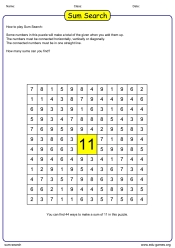
Like a word search — but for numbers! Hunt through the grid to find connected numbers that add up to the given target. Connections can run horizontally, vertically, or diagonally, making every puzzle a fresh and satisfying hunt. A brilliant activity that makes addition practice feel like a real game.
Addition Tic Tac Toe
Grades 1, 2, 3, 4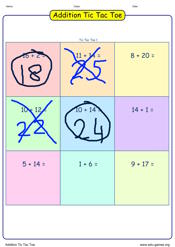
A classic two-player strategy game with a mathematical twist. Take turns placing your mark on the board and use addition skills to claim spaces. Solve the addition problems correctly to make your moves, and try to get three of your marks in a row before your opponent does. A fun way to practice addition while playing a familiar game.
Addition Wheels
Grades 1, 2, 3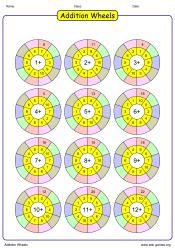
Practise addition facts in a fun, circular format that young learners love! Students add the centre number to each spoke to complete the wheel — a visual approach that builds speed and confidence with number bonds. Opt for coloured wheels to make the activity even more engaging for kids.
Arithmetic crossword
Grades 1, 2, 3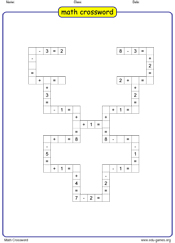
The classic crossword format — powered by arithmetic! Students solve addition and subtraction equations to fill in the crossword grid, combining literacy-style puzzle-solving with essential math practice. A refreshing change of format that keeps early learners engaged and motivated.
Balance the Scale
Grades 1, 2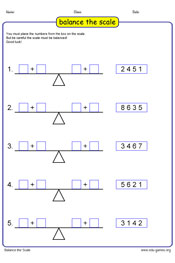
Tip the scales toward algebra! Students must make both sides of a balance equal by choosing the right numbers — a beautiful, intuitive introduction to equations for early learners. Builds algebraic thinking from the very first grade without ever using the word "algebra".
Balancing Equations
Grades 1, 2, 3, 4, 5, 6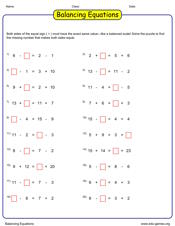
Help students master the true meaning of the equal sign with these engaging balancing equations worksheets! Designed to build early algebraic thinking, these activities guide learners through solving missing values on both sides of an equation (ranging from simple single-digit addition to advanced multiplication factor puzzles). Perfect for strengthening number sense, logical reasoning, and operational fluency in elementary classrooms or at home.
Connect Four Math
Grades 1, 2, 3, 4, 5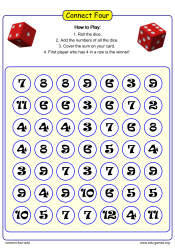
Connect Four — the classic game you love — reimagined as a math challenge! Students solve arithmetic problems to claim their squares and build a line of four. An innovative game-worksheet format that turns math practice into competitive, laugh-out-loud classroom fun. Completely free to generate!
Find the tens
Grades 1, 2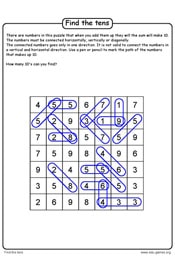
Hunt for hidden groups of connected squares that add up to exactly 10! Squares can link horizontally, vertically, or diagonally — making every puzzle a fresh search-and-solve adventure. A fantastic activity for building number sense and quick mental addition skills.
Match sum
Grades 2, 3, 4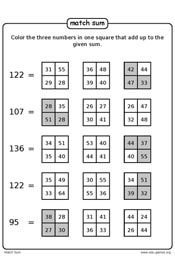
Three squares, four numbers each — but only three numbers in each square add up to the target sum. Can you spot the odd one out in all three squares? A sharp, satisfying puzzle that trains both addition skills and careful observation at the same time.
Math bingo
Grades 1, 2, 3, 4, 5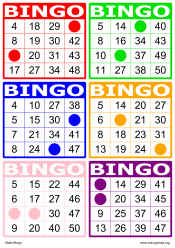
Bingo — but smarter! Instead of calling out numbers, a math problem is announced and players must solve it to find the answer on their card. Competitive, noisy, and brilliantly effective for drilling arithmetic facts. Your class will beg to play it again and again.
Math domino
Grades 2, 3, 4, 5, 6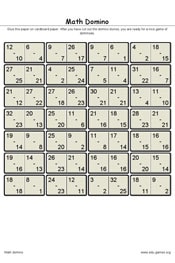
Your favourite domino game — with a math twist! Instead of dots, the tiles show arithmetic problems. Match the answers to keep the chain going and sneak in valuable calculation practice without it feeling like a drill. Perfect for pairs or small groups.
Math Maze
Grades 1, 2, 3, 4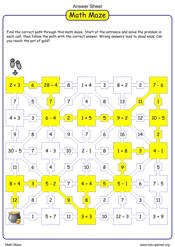
Generate custom printable math maze worksheets with your choice of operations. Students solve problems to trace the correct path - perfect for mixed practice in the classroom or at home.
Math Search
Grades 2, 3, 4, 5, 6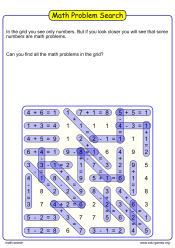
Word search — but for math problems! Hidden arithmetic equations are concealed inside the grid, running in multiple directions. Choose your operators, grid size, and search directions to create a puzzle that's perfectly calibrated for any grade level. A refreshingly different way to practise any operation.
Math snake
Grades 1, 2, 3, 4, 5, 6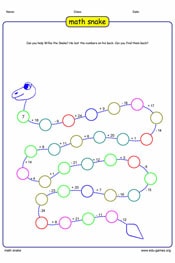
Follow the snake and fill in the missing numbers! Start with the given number, apply the operator and operand to find the next — then keep going until you reach the tail. A winding, wiggling arithmetic adventure that makes practising number sequences genuinely fun for young learners.
Missing operands
Grades 2, 3, 4, 5, 6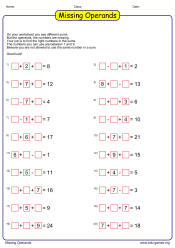
The operators are there — but the numbers have gone missing! Students must figure out which operands make each equation balance correctly. A clever reverse-engineering challenge that builds deep number sense and a genuine understanding of how addition and subtraction work.
Missing operators
Grades 2, 3, 4, 5, 6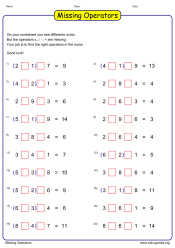
The numbers are there — but the +, −, ×, ÷ signs have vanished! Students must figure out which operators make each equation true, and then add brackets to show the correct order of operations. A uniquely challenging worksheet that deepens understanding of how math actually works.
Multi Digit without regrouping
Grades 2, 3, 4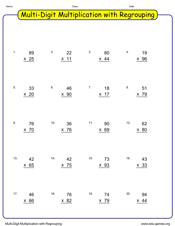
Generate free printable multi-digit multiplication worksheets without regrouping for grades 2 to 4. No carrying needed, perfect for introducing the written multiplication algorithm.
Multi Digits Addition
Grades 2, 3, 4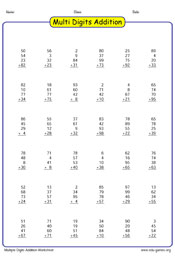
Step up from single digits and tackle multi-digit addition with confidence! Choose between 2 to 4 addends, select the number of digits, and generate up to 36 problems per worksheet in a clear vertical format. Fully customizable to match exactly where your students are right now.
Multi-Digit Subtraction
Grades 2, 3, 4, 5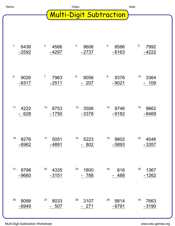
Step up from single digits and tackle multi-digit subtraction with confidence! Choose your preferred digits, customize borrowing options, and generate up to 36 problems per worksheet in a clear vertical format. Fully customizable to match exactly where your students are right now.
Multiplication Battle
Grades 2, 3, 4, 5, 6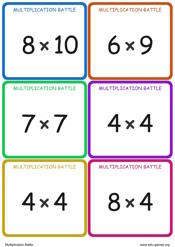
Make multiplication practice exciting with a competitive math game! Multiplication Battle is a printable card game where students solve multiplication problems, compare their answers, and battle to find the highest product. Create a new set of cards in seconds, adjust the difficulty to match your students’ skills, then simply print, cut, and start playing.
Multiplication Bingo
Grades 2, 3, 4, 5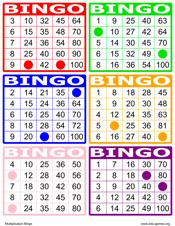
Create Multiplication Bingo cards for a small-group math game. Players take turns drawing two number cards, multiply them to create a multiplication question, and check their own bingo cards for the answer. The students run the game themselves
Multiplication Tic Tac Toe
Grades 2, 3, 4, 5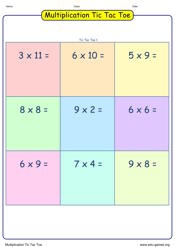
Put your multiplication skills to the test in this fast-paced two-player game! Solve multiplication problems to claim spaces on the board, then use strategy to block your opponent and build your own winning line. Be the first to get three marks in a row and claim victory!
Open the safe
Grades 2, 3, 4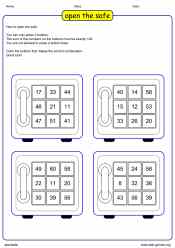
Can you crack the code? Press exactly 4 buttons on the safe's panel so their sum equals 100. Sounds simple — but with 10 numbered buttons to choose from, it's trickier than you think! A brilliantly addictive printable math puzzle that makes addition practice genuinely exciting.
Secret trail
Grades 2, 3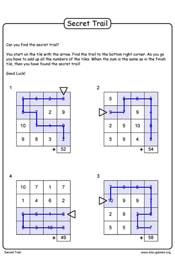
A hidden path is waiting to be discovered! Start at the arrow and add your way across the tiles — but only the trail where all the numbers sum to the target value is the correct one. An engaging addition challenge that feels like a real treasure hunt.
Subtraction Battle
Grades 1, 2, 3, 4, 5, 6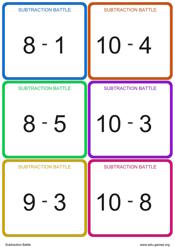
Turn subtraction practice into a fast-paced math game! Subtraction Battle is a printable card game that gives students repeated practice subtraction while they compete to find the lowest result. Generate a fresh set of cards in seconds, customize the difficulty, print, cut, and play.
Subtraction Maze
Grades 1, 2, 3, 4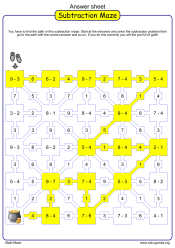
Find the path through this tricky subtraction maze and claim the pot of gold at the end! Solve each problem, choose the right answer path, and keep going. A brilliantly motivating format that turns repetitive subtraction practice into an engaging, self-checking adventure.
Subtraction Tic Tac Toe
Grades 1, 2, 3, 4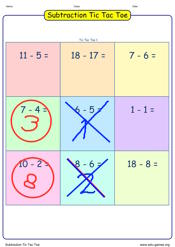
Put your subtraction skills to the test in this fun two-player strategy game! Take turns placing your marks on the board by solving subtraction problems correctly, then use smart moves to claim spaces and build a row of three. Be the first player to get three in a row and win the game!
How to Use the Grade 2 Arithmetic Generators
Each generator targets one arithmetic skill. Choose the generator that matches what your class is currently working on, then use the number range setting to calibrate difficulty. For addition and subtraction, start within 20 while students are building mental math fluency — these are the facts that must be automatic before multi-digit work is reliable. Once single-digit sums are secure, expand the range to 100 and then 1,000, where the focus shifts from recall to place-value strategy.
The key decision point is knowing when to move a student from within-20 to within-100 practice. A reliable indicator is whether they can produce answers to basic single-digit sums (6 + 7, 8 + 9) within two seconds without visible counting. If students are still using count-on strategies for those facts, staying within 20 to build recall is more productive than moving to two-digit problems where the same slow fact retrieval will interrupt every step. Also check out the Grade 2 game worksheets, which add a goal-based format that motivates more repetitions per session than a plain drill sheet.
Why Grade 2 Arithmetic Sets the Foundation for Grade 3
Grade 2 has an unusually high-stakes fluency requirement: by the end of the year, students must know all sums of two one-digit numbers from memory (2.OA.2). This is not the same as being able to calculate them — it means instant recall, the same way a reader recognises words without sounding them out. Students who still calculate 8 + 6 by counting on in Grade 3 will be slowed by that step in every multi-digit addition, every subtraction check, and every multiplication table they encounter.
Place value understanding at Grade 2 (2.NBT) is the structural foundation for the multi-digit arithmetic that dominates Grades 3–5. A student who understands that 347 = 300 + 40 + 7 can reason about addition and subtraction using decomposition and regrouping. A student who does not have that understanding will treat multi-digit arithmetic as a sequence of arbitrary steps rather than an application of a structure, and will make errors that are very hard to diagnose and correct later.
Because every worksheet on this site is generated dynamically, you can produce a fresh set of problems for every practice session without any prep time. Use the same generator for a Monday warm-up, a Wednesday homework sheet, and a Friday quiz review — students never see the same numbers twice, so the practice stays challenging even when the format is familiar.
Share these free Grade 2 arithmetic worksheets